Glendale, UT · Salt Lake County
Roof Leak Water Removal in Glendale, UTLeak Source Identification & Emergency Roof Tarping
Roof Leak Water Removal in Glendale covers emergency roof tarping, attic water extraction, ceiling water damage cleanup and wet insulation removal.
Answered 24/7
Roof Leak Water Removal in Glendale, UT
A small roof leak can run for weeks inside an attic before anyone notices. When the stain finally shows, the decking, insulation and drywall may all be wet.
Roof leak water removal is available in Glendale and nearby South Salt Lake, Rose Park and Centerfield. The pros tarp the opening if needed, extract the water and dry the attic framing and ceiling drywall.
What Roof Leak Water Removal Covers in Glendale
Leak Source Identification
Water often travels along rafters before it drips, so the stain is rarely under the hole. Tracing it in the attic shows the real entry point.
Emergency Roof Tarping
Tarping is a stopgap. It keeps the next rain out of the attic and ceilings until a roofer can replace the decking, flashing or shingles.
Wet Insulation Removal
Insulation that only got damp at the edges may dry in place. Material that is matted, stained or smells musty is taken out and replaced after drying.
Wall Cavity Drying
Water that follows a top plate or a pipe chase can soak insulation inside a wall. Moisture meters find it, and air is pushed into the cavity to dry it.
Ceiling Water Damage Cleanup
Stained or sagging drywall is checked with a moisture meter. Sections that are soft or bowed are cut out so the cavity above can dry and the ceiling can be patched.
Signs You Need Roof Leak Water Removal
Musty Smell After Rain
A damp, musty smell that gets stronger after storms often means insulation in the attic is staying wet.
Dark Spots on Attic Wood
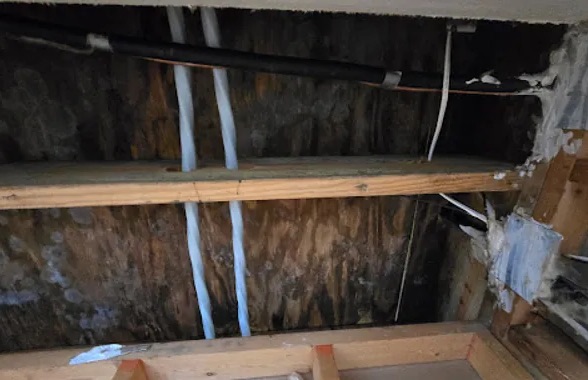
Dark streaks or spots on rafters and roof decking show where water has been running or sitting for a while.
Puddles Under the Ceiling
Water on the floor under a stain or a drip means the ceiling above is already holding more than it can absorb.
Wet or Flattened Insulation
Insulation that is matted, stained or damp to the touch in the attic means rain is getting past the roof deck.
How Roof Leak Water Removal Works in Glendale
Step 1: Assess the Leak
The pros look at the roof, attic and ceilings to see how long the leak has been running and what it has soaked.
Step 2: Remove Water and Debris
Water, wet insulation and fallen drywall are cleared out so the attic and room below can dry evenly.
Step 3: Clean Wet Surfaces
Wood and drywall that stayed wet for a day or more are cleaned and treated before drying to limit odor and mold.
Step 4: Monitor Until Dry
Readings are taken on each visit and the equipment is moved as areas dry, until every wet spot reaches its target.
What Causes Roof Leaks in Glendale Homes
Clogged Gutters
Leaves and debris in gutters make water back up at the roof edge, where it seeps under shingles and into the soffit and walls.
Aging Roofing Materials
As shingles age they curl, lose granules and crack, and slow leaks start where the roof covering has worn thin.
Skylight Seals
Skylight gaskets and curb flashing wear out, and water runs into the shaft and down the drywall around the opening.
Worn Flashing
Flashing around chimneys, skylights and wall joints can crack, rust or pull loose, and water runs in along the gap.
Roof Leaks in Glendale Homes and Commercial Buildings
Residential Roof Leak Water Removal
For homeowners, drying the attic and ceiling before stains spread can save the drywall. Moisture readings show what can stay and what has to come out.
Commercial Roof Leak Water Removal
Property managers get moisture readings and photos for each affected unit or suite, which helps when several tenants and an owner's insurer are involved.
When a Roof Leak Is Too Big for DIY
Do not poke a sagging ceiling to drain it yourself. The drywall can drop all at once, along with wet insulation and a lot of water.
Pricing Roof Leak Water Removal in Glendale
The cost of roof leak water removal in Glendale depends on how much of the attic and ceiling got wet, how much insulation must come out and how many days drying takes.
Emergency Tarping
If the roof needs a tarp before drying can start, the materials and labor for that step add to the bill.
Attic Access
Low, tight attics with little floor to stand on take longer to work in than open attics with a walkway.
How Long It Leaked
A leak caught during the first storm usually means less wet material than one that has been dripping into the attic for weeks.
Does Insurance Cover Roof Leak Water Removal?
The pros keep photos, moisture maps and a list of removed materials. You file the claim with your insurer and share these records with the adjuster.
Why Roof Leaks Need Professional Drying in Glendale
Safe Attic Work
The pros know how to move through an attic on the framing and handle wet ceilings without bringing them down.
Records for Your Claim
Photos, readings and a materials list give your adjuster a clear picture of what the roof leak damaged.
Notes for the Roofer
The entry point and the path the water took are documented so the roofer knows exactly where to look.
Emergency Attic Water Removal in Glendale
For an active roof leak in Glendale, call (385) 438-8393. Local water extraction experts handle the tarp, the water in the attic and the drying of the rooms below.
Call Now (385) 438-8393Local Roof Leak Water Removal Coverage for Glendale
The places below are also served, and each one has its own page.
- Roof Leak Water Removal in Salt Lake City
- Roof Leak Water Removal in South Salt Lake
- Roof Leak Water Removal in Rose Park
- Roof Leak Water Removal in West Valley City
- Roof Leak Water Removal in American Fork
- Roof Leak Water Removal in Saratoga Springs
- Roof Leak Water Removal in Lehi
- Roof Leak Water Removal in Herriman
Common Questions After a Roof Leak
What happens after the water is removed?
Drying equipment runs and the pros take readings until the attic and ceiling are dry. Then the roofer and drywall repairs can go ahead.
How is water removed from an attic?
Standing water is pulled out with wet vacuums and extractors, then soaked insulation is removed so the ceiling and framing can be dried.
Are old ceiling stains a sign of an active leak?
Not always. A dry stain may be from a past leak. A stain that is damp, growing or bulging means water is still getting in.
Why does wet insulation have to come out?
Wet insulation stays damp for a long time, holds water against the ceiling and framing, and stops insulating. Removing it lets the attic dry.
Why should rainwater be removed from the attic quickly?
Water in the attic soaks through the ceiling into the rooms below and keeps the framing wet. Removing it early limits drywall and insulation losses.